


At the Heart: Youth Participation
At the Heart: Youth Participation
We often hear that young people are lazy, disengaged, or indifferent to the issues that affect them. This is simply not true. The young people involved in Omoana’s projects are living proof of the opposite. In both Uganda and Iraq, they demonstrate remarkable energy, commitment, and determination every day. This is one of the greatest strengths of our work.
Beyond addressing essential health needs, Omoana is committed to strengthening key life skills: public speaking, self-confidence, critical thinking, respect for others, and active listening. These skills not only help uphold a fundamental right—the right to participate—but also contribute to building a more inclusive society shaped by engaged citizens who understand their ability to create change.
Since 2022, I have had the privilege of being involved with Omoana, first as a staff member and later as a committee member. This experience has allowed me to travel regularly to Uganda, build trusting relationships with local teams, and meet the young people involved in our projects. Through these encounters, I have witnessed remarkable transformations.
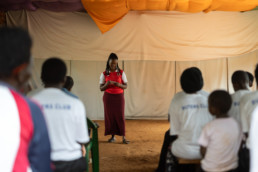
One example is Anisha, who could barely bring herself to say hello to me during her first workshop. A year later, she had become one of the spokespersons for the project implemented with St. Francis HCS. Today, she facilitates workshops, confidently shares her ideas, and encourages others to make their voices heard.
Omoana’s strength lies not only in providing children and young people with a space to express themselves, but also in genuinely listening to them. By taking the time to understand their perspectives and aspirations, we ensure that our responses address real needs in a relevant and respectful way. This is how we design all of our projects: by placing those most directly concerned at the centre of the process, remaining open to challenge and reflection, and affirming that every voice matters.
I invite you to discover, through the articles below, how these principles come to life in our projects in Uganda and Iraq.
Enjoy the reading!
Chloé Collier
Committee Member
Youth Clubs: Spaces for Solidarity and Active Participation
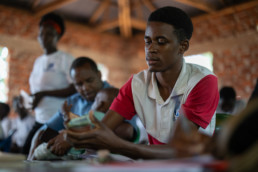
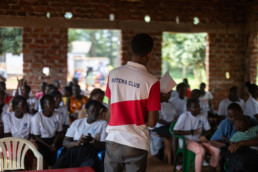
In Uganda, Omoana’s partners support youth clubs as genuine spaces for expression, participation, and mutual support. Established in schools and communities, these clubs provide safe environments where children and young people can share their experiences, strengthen their skills, and actively engage in local initiatives. Beyond peer support, they empower young people to become agents of change—able to identify challenges, propose solutions, and take concrete action to improve their communities.
In schools, Backup Uganda runs Inclusion Clubs. These clubs enable students to become advocates for change by supporting classmates with learning difficulties. They demonstrate that creating an inclusive environment depends not only on adults but also on the commitment and involvement of peers.
Within communities, Omoana House and St. Francis HCS support youth clubs for young people living with HIV. Members, often those with greater experience or confidence, provide emotional support to their peers, particularly in encouraging adherence to treatment. This role has become even more important in the context of USAID funding cuts, which have weakened many support systems. These clubs also operate collective savings groups, strengthening solidarity and helping young people plan for their future.
In Iganga, Girls Menarch Initiative runs inclusive menstrual health clubs involving both girls and boys as menstrual health ambassadors. These clubs also create opportunities for discussion on gender, violence prevention, and self-confidence through interactive activities and peer learning.
A particularly inspiring aspect of these initiatives is that several of their leaders are former beneficiaries of clubs previously supported by Omoana. Their journeys demonstrate the long-term impact of these spaces, which foster confidence, autonomy, leadership, and sustained engagement among young people.
Peace Initiatives: Youth Driving Change in Mosul
In Mosul, a city shaped by years of conflict, division, and reconstruction, young people are emerging as a powerful force for social transformation. A crossroads of identities, histories, and communities, the city continues to face challenges, but it is also a place where hopeful initiatives promoting dialogue and understanding are taking root.
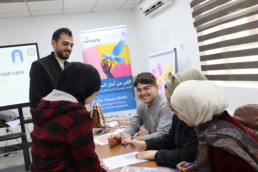
The project implemented by Aid Gate Organization, Omoana’s partner in Iraq, aims to give young people a stronger voice by supporting them in reflecting on their identities and their capacity to create change. Identity is never singular: each person carries multiple layers of belonging, including gender, family, beliefs, community, and personal history. While some aspects of identity are inherited or imposed, others are shaped by our choices—our words, our attitudes, and the way we relate to others. Peace begins with these everyday choices: rejecting narratives of division and choosing dialogue, understanding, and mutual respect.
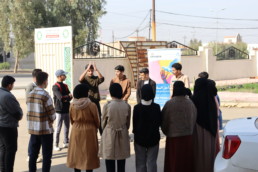
To support this process, young people take part in artistic activities such as drawing, music, and forum theatre, which provide opportunities to express their experiences and imagine alternative futures beyond imposed narratives. At the same time, training sessions for peace education facilitators and advocacy workshops have been launched to strengthen their skills and engagement.
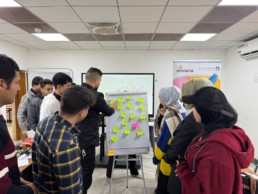
Advocacy is approached as a practical tool for change. It involves raising awareness, mobilising communities, and influencing behaviours, decisions, or policies around issues that matter to young people. Through the Civic Engagement Together programme, participants develop essential skills in public speaking, storytelling, and community mobilisation while learning how to design collective actions promoting human rights, peace, and sustainable development.
In the coming months, young participants will develop and propose their own peace initiatives, which will be selected and supported for implementation. This important step will further strengthen their civic engagement and reinforce their role as active agents of change within their communities.

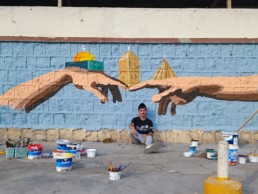
In Mosul, a Youth Committed to Peace
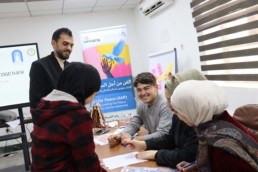
Since 1 July 2025, Omoana and its partner Aid Gate Organization (AGO) have launched a new phase of their project supporting young people in Mosul as they rebuild themselves, their communities, and their futures. In a city deeply marked by conflict and loss, young people are seeking spaces where they can express themselves, heal, and reclaim an active role in society.
The project draws on creativity, art, and collective learning to strengthen the resilience and talents of Mosul’s youth. More than 600 young people will take part in structured programs combining drawing, painting, music composition, performance, filmmaking, theatre, and fashion design. Each cycle of 15 sessions helps participants develop artistic skills while fostering self-esteem, confidence, and the expression of lived experiences. Here, art becomes a shared language that brings people together, soothes, and opens new horizons.
This new phase also places youth-led advocacy at its core. Three days of training will reinforce participants’ knowledge of human rights, violence prevention, and peacebuilding. They will then receive support to implement 25 innovative initiatives ranging from forum theatre performances to awareness-raising videos and public murals.
By sharing their messages, young people help transform mindsets and rebuild social cohesion.
Finally, the project promotes peer learning by training youth trainers in peace education and art with psychosocial aims, enabling a further 700 young people to benefit indirectly.
With this renewed momentum, Omoana is empowering a generation that is rebuilding itself by creating, sharing, and taking action for lasting peace.
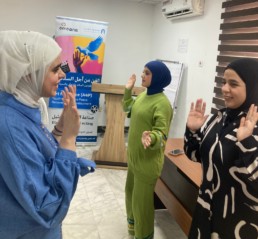
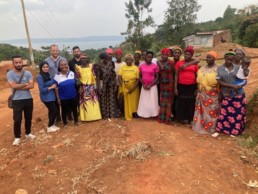
2 weeks of exchange, 10 years of experience - News from Omoana - October 2024
Thanks to the Fédération Genevoise de Coopération’s Knowledge Sharing fund, three Iraqi colleagues were able to travel to Uganda, where they took part in workshops and visited projects. The exchanges, particularly on how to support children affected by violence, proved invaluable. Amjed Al-Rufaye gives us some feedback.
I’ve always been fascinated by the projects supported by Omoana in Uganda, but during my time there they continued to exceed my expectations.
My name is Amjed Al-Rufaye and I am originally from Baghdad, Iraq. In the past, I have worked for various NGOs in Iraq and Turkey. I am currently working as a technical advisor for Omoana and Aid Gate Organization in Iraq.
Our trip to Uganda began in Gulu with a four-day workshop bringing together teams from the NGOs currently supported by Omoana in Uganda. Along with other colleagues, we led visual art exercises for psychosocial support as part of the creation of the ‘Drawing Together’ manual. The workshop continued with Adrien and other drama coaches presenting drama exercises (for the ‘Theatre Together’ manual). It was a creative and interactive experience that filled the room with laughter. At the end, we listened to the feedback, discussed the importance of art, how it can benefit children and how it can be adapted to local projects and culture.
In the days that followed, we had meetings with Omoana’s NGO partners. We had a presentation of the teams behind the projects, exchanged questions and learned about each other’s experiences. After that, they took us out into the field and showed us how they interact with the local communities.
During these visits, I gained valuable information about the history and needs of the local community, and how Uganda and Iraq have gone through similar circumstances. For example, I loved what vivo is doing in Gulu to help victims overcome the trauma of being abducted by the Lord’s Resistance Army as children and the horrors they were forced to see or do. Hearing these experiences reminded me of the time of the Islamic State in Mosul and the stories I heard from the locals. It made me think about how we can adapt what vivo does to help young people in detention centres and the community. The same goes for St. Moses and Hashtag Gulu and the psychosocial support projects they run in the community, and how we can implement similar projects by supporting and revitalising community centres for neglected young people in Iraq. Omoana House and St. Francis and their support for people living with HIV have opened my eyes to a serious problem facing Iraq. The lack of awareness about HIV and the growing number of undisclosed cases in the community make it a potential time bomb.
We learned a lot about the processes of various development NGOs, the challenges they faced and how they overcame them. It provided me with information about Omoana, highlighted the importance of art and how it helped beneficiaries to express themselves when words were not enough. It also opened my eyes to new ideas and projects that can be adapted in Iraq. It was a very artistic experience filled with traditional dances and theatrical performances. In a fortnight in Uganda, we feel like we’ve gained ten years’ experience! We exchanged invaluable knowledge, immersed ourselves in a new culture and formed solid friendships, all the while escaping the 50°C temperatures in Baghdad.
Amjed Al-Rufaye
Technical Counsellor, Omoana

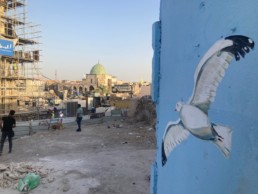
Breaking news : Omoana extends its activities to Iraq
Building a new narrative for peace with the youth of Mosul
Omoana strengthens the resources of young people as actors in the development and social cohesion of their country. Originally active in Uganda, with a wealth of experience working with young people formerly affiliated to the Lord’s Resistance Army (LRA), the organisation has developed expertise in psychosocial support through art and in mental health. As a result, it has decided to extend its activities to Iraq, a country where young people face similar dynamics of violence, with many children and young people associated with armed groups, having serious consequences for their well-being.
Developing social skills and preventing violence among young people
A long history of violence
With almost a quarter of the Iraqi population aged between 15 and 24, young people are the backbone of the country’s social, economic and political transformation. However, they are disproportionately affected by conflict. After the Islamic State (EI) occupied much of its territory, much remains to be rebuilt. Iraqi children and young people have been greatly affected by the crisis. They have suffered and sometimes committed high levels of violence. Despite the environment in which they lived and the groups they joined, they must be given the opportunity to build a new narrative for peace.
Years of conflict between Iraqi security forces and the EI have devastated the north of the country. According to the United Nations Office for the Coordination of Humanitarian Affairs (UNOCHA), nearly 664,000 children are at risk of protection. Of these children, 122,000 are living in critical shelters with limited access to essential services. The lack of livelihood opportunities for their families and the COVID-19 epidemic have had a negative impact on their income-generating potential. As a result, children continue to be exposed to the risks of child labour and early marriage. Around 456,000 children still lack basic civil status documents and almost 300,000 school-age children do not regularly attend formal or informal education, putting them at increased risk of recruitment by armed groups in the areas where they operate. More than 1,000 children remain deprived of their liberty for national security reasons. Children from families previously associated with armed groups, or perceived to be so, are discriminated against and face difficulties integrating into their communities.
The protection issues mentioned above are factors that encourage young people to return to armed groups. Be that as it may, the social integration of young people at risk of recruitment by violent extremist groups remains a key and complex issue that needs to be addressed.
Art for peace and protection for the children of Mosul
Omoana’s first partner in the country will be Aid Gate Organization (AGO). Aid Gate Organization (AGO) is an independent, non-partisan national organisation with a history dating back to 2014 with the start of the occupation of much of Iraq by The Islamic State (EI). AGO works tirelessly to help internally displaced people, refugees, asylum seekers, returnees and vulnerable host communities in Iraq. The aim of the new project, implemented with technical and financial support from Omoana, will be to build the capacity, resilience and talents of children and young people affected by conflict through arts-based initiatives and protection services. It will target children and young people in detention, as well as those in at-risk communities. The approach aims to work at different levels to support the reintegration of children formerly affiliated to armed groups and to promote the well-being of young people in communities. At an individual level, children in conflict with the law will be monitored to ensure they have access to legal services and professional education and training. Low-intensity psychological support will also be available. Their families will also be supported and advised on the best ways to care for a child or young person after detention. Children and young people in detention and in the communities will receive peace education sessions to strengthen their social skills and critical thinking and prevent violence. They will also benefit from artistic activities to develop their talents and personal confidence. Young people in the communities will also be encouraged to organise their own community events on peace-building themes. Tools such as forum theatre and the creation of murals will be used. Social workers from AGO and the public services will also receive training in peace education for young people and in low-intensity psychological services.
Preserving the dignity of children affiliated to armed groups is no easy task. It requires commitment, networking and technical skills. We are striving to work with national and international experts to respond to these challenges as effectively as possible and to try to give them sympathetic attention, despite the violence of which they are above all victims.