



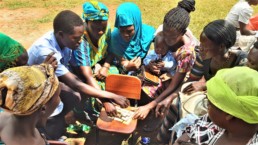
Every Child Can Learn: Omoana strengthens school inclusion in Uganda
From 1 December 2025 onward, Omoana is supporting the expansion of the “Every Child Can Learn” project led by Backup Uganda in Northern Uganda.
This program aims to build a truly inclusive school environment for children with learning difficulties or disabilities — an issue that remains insufficiently recognized in Uganda. In Ugandan public schools, the challenges are many: overcrowded classrooms, a lack of materials, and low household incomes. When a child experiences a learning difficulty — dyslexia, dyscalculia, autism, or attention deficit and/or hyperactivity disorder (ADHD) — these barriers become even heavier to bear. Without understanding from adults, many children develop feelings of rejection, lose confidence, and gradually drop out of school, jeopardizing their future.
To address this situation, the project invests in strengthening the capacities of education teams. Six hundred teachers and school administrators will be trained to detect learning difficulties early and adapt their teaching practices. In-person workshops, classroom coaching, and hybrid learning modules also make it possible to reach rural schools, while providing teams with practical tools to support every child according to their specific needs.
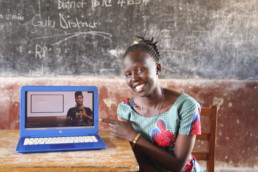
Collaboration with parents and caregivers is another essential pillar. Many are unaware of the existence of learning difficulties or interpret them through local beliefs. Community meetings and episodes of the “Every Child Can Learn” podcast, available in several languages, help improve family understanding and engagement. Digital tools make information more accessible, but in-person exchanges remain indispensable to build trust and answer questions.
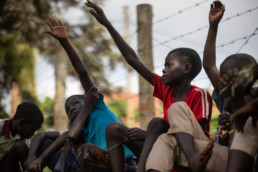
Finally, the introduction of inclusion clubs will enable students to become active contributors to a caring and supportive school environment. These clubs create spaces where each student can express themselves, share experiences, and encourage their peers — helping transform school culture from within.
Through this project, Omoana contributes to building schools where every child can learn, thrive, and find their place — whatever their differences may be.

In Mosul, a Youth Committed to Peace
Since 1 July 2025, Omoana and its partner Aid Gate Organization (AGO) have launched a new phase of their project supporting young people in Mosul as they rebuild themselves, their communities, and their futures. In a city deeply marked by conflict and loss, young people are seeking spaces where they can express themselves, heal, and reclaim an active role in society.
The project draws on creativity, art, and collective learning to strengthen the resilience and talents of Mosul’s youth. More than 600 young people will take part in structured programs combining drawing, painting, music composition, performance, filmmaking, theatre, and fashion design. Each cycle of 15 sessions helps participants develop artistic skills while fostering self-esteem, confidence, and the expression of lived experiences. Here, art becomes a shared language that brings people together, soothes, and opens new horizons.
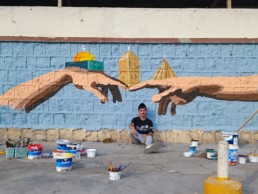
This new phase also places youth-led advocacy at its core. Three days of training will reinforce participants’ knowledge of human rights, violence prevention, and peacebuilding. They will then receive support to implement 25 innovative initiatives ranging from forum theatre performances to awareness-raising videos and public murals.
By sharing their messages, young people help transform mindsets and rebuild social cohesion.
Finally, the project promotes peer learning by training youth trainers in peace education and art with psychosocial aims, enabling a further 700 young people to benefit indirectly.
With this renewed momentum, Omoana is empowering a generation that is rebuilding itself by creating, sharing, and taking action for lasting peace.
Therapy for Women and Girls Survivors of Sexual Violence in Northern Uganda
During the war with the Lord’s Resistance Army (LRA), sexual violence against women and girls was widespread. It was used as a means of terror, but also to force them to conceive children who were intended to become future fighters. vivo documents and tracks these acts of violence, both during the war and within post-conflict society.
The majority of vivo’s clients (60 to 70% of formerly abducted girls and women) experienced sexual violence, some as early as six years old, with an average age of 15 at the time of the first assault. Many were repeatedly raped by rebels, often as part of their forced assignment as “wives.” Women also suffered other forms of gender-based violence at the hands of the LRA, including beatings or executions for cooking during menstruation or for wearing trousers.
Beyond the psychological trauma, these survivors still face long-lasting consequences today: 30% of the women and girls who were raped became pregnant in captivity, many of them giving birth without any medical assistance. In today’s post-conflict society, they suffer from stigma, struggle to explain to their children the violent circumstances of their conception, and are often denied rights to paternal land—both for themselves and their children. Many also live with chronic health issues (such as HIV), financial insecurity, and must take on the role of mother alone or live with partners who reject their stepchildren.
Sexual violence against women remains a pressing issue in northern Uganda’s post-war society, with survivors continuing to face stigma and social exclusion. vivo has established a broad network of actors providing various forms of support for survivors of gender-based violence, including legal, medical, and social assistance. Within this network, vivo is responsible for trauma-focused therapy for survivors, as well as general psychological support, family mediation, and emergency planning for women in high-risk relationships. vivo also offers anger management training for violent partners who are willing to change. Additionally, vivo trains public and private partner organizations on the psychological impact of sexual violence, helping them better support survivors.
Anett Pfeiffer
vivo Uganda