
'/%3E%3C/svg%3E)

At the Heart: Youth Participation
We often hear that young people are lazy, disengaged, or indifferent to the issues that affect them. This is simply not true. The young people involved in Omoana’s projects are living proof of the opposite. In both Uganda and Iraq, they demonstrate remarkable energy, commitment, and determination every day. This is one of the greatest strengths of our work.
Beyond addressing essential health needs, Omoana is committed to strengthening key life skills: public speaking, self-confidence, critical thinking, respect for others, and active listening. These skills not only help uphold a fundamental right—the right to participate—but also contribute to building a more inclusive society shaped by engaged citizens who understand their ability to create change.
Since 2022, I have had the privilege of being involved with Omoana, first as a staff member and later as a committee member. This experience has allowed me to travel regularly to Uganda, build trusting relationships with local teams, and meet the young people involved in our projects. Through these encounters, I have witnessed remarkable transformations.
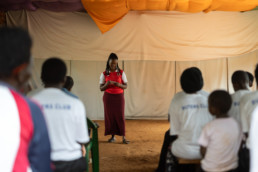
One example is Anisha, who could barely bring herself to say hello to me during her first workshop. A year later, she had become one of the spokespersons for the project implemented with St. Francis HCS. Today, she facilitates workshops, confidently shares her ideas, and encourages others to make their voices heard.
Omoana’s strength lies not only in providing children and young people with a space to express themselves, but also in genuinely listening to them. By taking the time to understand their perspectives and aspirations, we ensure that our responses address real needs in a relevant and respectful way. This is how we design all of our projects: by placing those most directly concerned at the centre of the process, remaining open to challenge and reflection, and affirming that every voice matters.
I invite you to discover, through the articles below, how these principles come to life in our projects in Uganda and Iraq.
Enjoy the reading!
Chloé Collier
Committee Member
Youth Clubs: Spaces for Solidarity and Active Participation
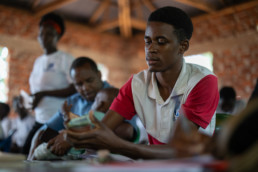
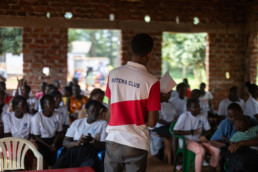
In Uganda, Omoana’s partners support youth clubs as genuine spaces for expression, participation, and mutual support. Established in schools and communities, these clubs provide safe environments where children and young people can share their experiences, strengthen their skills, and actively engage in local initiatives. Beyond peer support, they empower young people to become agents of change—able to identify challenges, propose solutions, and take concrete action to improve their communities.
In schools, Backup Uganda runs Inclusion Clubs. These clubs enable students to become advocates for change by supporting classmates with learning difficulties. They demonstrate that creating an inclusive environment depends not only on adults but also on the commitment and involvement of peers.
Within communities, Omoana House and St. Francis HCS support youth clubs for young people living with HIV. Members, often those with greater experience or confidence, provide emotional support to their peers, particularly in encouraging adherence to treatment. This role has become even more important in the context of USAID funding cuts, which have weakened many support systems. These clubs also operate collective savings groups, strengthening solidarity and helping young people plan for their future.
In Iganga, Girls Menarch Initiative runs inclusive menstrual health clubs involving both girls and boys as menstrual health ambassadors. These clubs also create opportunities for discussion on gender, violence prevention, and self-confidence through interactive activities and peer learning.
A particularly inspiring aspect of these initiatives is that several of their leaders are former beneficiaries of clubs previously supported by Omoana. Their journeys demonstrate the long-term impact of these spaces, which foster confidence, autonomy, leadership, and sustained engagement among young people.
Peace Initiatives: Youth Driving Change in Mosul
In Mosul, a city shaped by years of conflict, division, and reconstruction, young people are emerging as a powerful force for social transformation. A crossroads of identities, histories, and communities, the city continues to face challenges, but it is also a place where hopeful initiatives promoting dialogue and understanding are taking root.
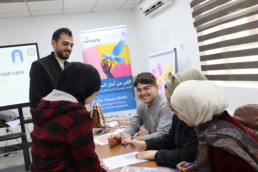
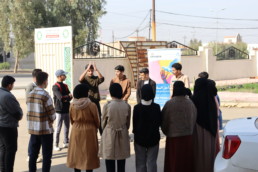
The project implemented by Aid Gate Organization, Omoana’s partner in Iraq, aims to give young people a stronger voice by supporting them in reflecting on their identities and their capacity to create change. Identity is never singular: each person carries multiple layers of belonging, including gender, family, beliefs, community, and personal history. While some aspects of identity are inherited or imposed, others are shaped by our choices—our words, our attitudes, and the way we relate to others. Peace begins with these everyday choices: rejecting narratives of division and choosing dialogue, understanding, and mutual respect.
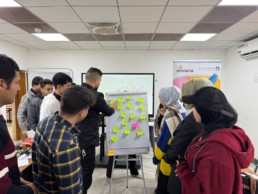
To support this process, young people take part in artistic activities such as drawing, music, and forum theatre, which provide opportunities to express their experiences and imagine alternative futures beyond imposed narratives. At the same time, training sessions for peace education facilitators and advocacy workshops have been launched to strengthen their skills and engagement.
Advocacy is approached as a practical tool for change. It involves raising awareness, mobilising communities, and influencing behaviours, decisions, or policies around issues that matter to young people. Through the Civic Engagement Together programme, participants develop essential skills in public speaking, storytelling, and community mobilisation while learning how to design collective actions promoting human rights, peace, and sustainable development.
In the coming months, young participants will develop and propose their own peace initiatives, which will be selected and supported for implementation. This important step will further strengthen their civic engagement and reinforce their role as active agents of change within their communities.